
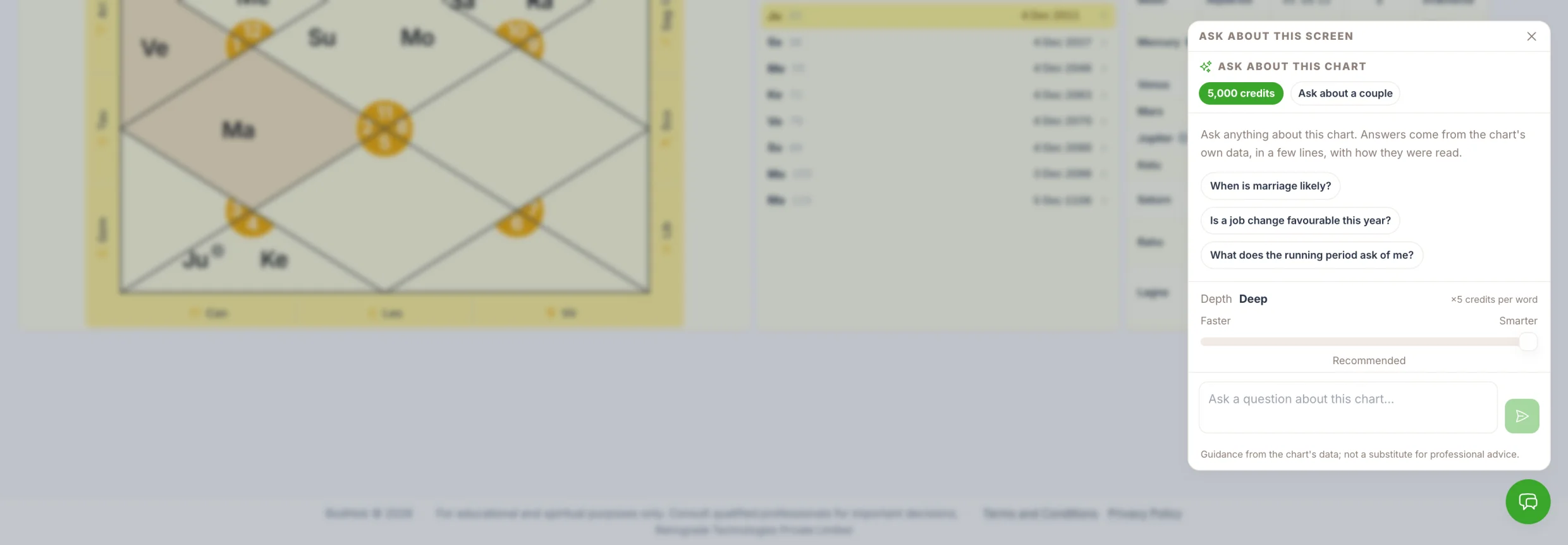
Astrologers keep consultation notes so the next reading starts where the last one ended: the question asked, what the chart and running dasha showed, what was said, and what to check next. In Bodhlok, client notes, consultation history, life events, follow-ups and family links sit beside the same native's chart, so the astrologer reviews the record before the client speaks.
A client comes back after eight months. Last time she asked about a job change; you remember the Shani antardasha, roughly, and that you suggested waiting for a transit to pass. But which transit, and what exactly did you say? If the notes are in a paper register, a phone note and a WhatsApp thread, the first ten minutes of the consultation go into reconstructing your own reasoning.
Good consultation notes fix that. This guide covers what practising astrologers record, why it matters for the quality of the next reading, and how Bodhlok software keeps that record beside the chart.
Why consultation notes matter in Jyotish practice
A reading is never only about the chart. It is about a question asked at a particular time, under a particular dasha, with particular transits running. When the client returns, three things have changed: the period, the sky and their life. Notes let you compare.
- Continuity of reasoning. If you said the matter would move once the antardasha changed, you can open the timeline and see whether it has.
- Testing your own work. Recorded life events ("changed job in March", "married last year") let you check how a dasha or transit actually played out in that chart. This is how an astrologer's judgement sharpens over years.
- Respect for the client. People notice when you remember their question. They also notice when you contradict what you said last time without explaining why.
What to record after each consultation
A useful note is short and structured. Most experienced practitioners capture:
- The question in the client's words. "Will I get the transfer?" is different from "Should I ask for the transfer?"
- The running periods. Mahadasha, antardasha and, where it mattered, the pratyantar (third-level dasha) at the time of the reading.
- What you looked at. The houses, lords, vargas (D9, D10) and transits that formed your view.
- What you said, as a tendency. Record the framing you gave, not a certainty you didn't give.
- Any guidance or remedy discussed, and whether the client wanted it.
- What to check next time. A transit to watch, a period change, a follow-up date.
Keep notes factual and private. Birth details and what a client tells you in a consultation are confidential.
For More details:- Save Client Life Events & Notes in Jyotish Software | Free Software for Astrologers & Practitioners
Life events: the record that teaches you most
Separate from consultation notes, keep a list of dated life events the client shares: education, marriage, moves, career changes, births in the family. Over time, each event becomes a data point you can lay over the dasha timeline. This is also how many astrologers check birth-time accuracy before relying on fine divisions such as the D60 or KP sub-lords.
Family links
Astrologers are often consulted by several members of one family. Linking those charts lets you move from a parent's question to a child's chart without searching, and keeps the context of a family matter together, for example kundli matching for a sibling or a muhurta that must suit more than one person.
How Bodhlok keeps notes beside the chart
Bodhlok vedic astrology software was built so the work around a reading stays in the same place as the reading. On the desk:
- Client notes, consultation history and follow-ups are attached to the native, so opening a chart opens its record.
- Life events and family links sit with the client, not in a separate file.
- Consultations and bookings appear beside the chart work, so you can see when you last spoke and what was booked next.
- The running period is visible on every screen, which makes it easy to compare today's dasha with the one recorded in your last note.
- Reports as PDFs (kundli, remedies, muhurta and reading reports) can be prepared from the same chart when a client wants something to take away.
- Roles and seats let a practice with staff share client records with the access each person needs.
Access depends on ownership, account permissions and the team roles you set. Review the access you grant within your practice.
As Alok Khandelwal puts it on the For Astrologers page, these tools "simplify the work around a consultation. They do not promise clients or income." The reading still comes from your knowledge and the care you take with each person.
A simple routine for returning clients
- Open the client and read the last note before the session.
- Compare the dasha recorded then with the period running now.
- Open the transit chart over the natal and check whatever you flagged to watch.
- Ask about life events since the last consultation and add them.
- After the session, write the note while it is fresh: question, periods, what you looked at, what you said, what to check next.
Five minutes of preparation changes the whole tone of a returning consultation.
Related guides
Read the career analysis walkthrough to see a question taken from chart to answer, and the guide on how Bodhlok's AI consult lists what it read, so a reading's reasoning can be kept in your notes as well.
Start with a sample chart
Open your free desk at bodhlok.com, load a sample chart, add a test note and a life event, and see how the record sits beside the chart and the dasha timeline.
Frequently asked questions
1. What should an astrologer write in consultation notes?
Record the question in the client's words, the mahadasha and antardasha running at the time, the houses, vargas and transits you looked at, what you said as a tendency, and what to check at the next consultation.
2. Is there astrology software that keeps client notes and consultation history?
Yes. Bodhlok keeps client notes, consultation history, life events, follow-ups and family links attached to each native's chart, beside the dasha, transit and report tools.
3. Why should astrologers record clients' life events?
Dated life events let you compare what actually happened with the dashas and transits running at the time. That builds your judgement and helps check whether the birth time is reliable.
4. Can a practice with staff share client records in Bodhlok?
Yes. Roles and seats let a practice share client records, with access set by ownership, permissions and the roles you assign.
5. Are client birth details kept private?
Birth details and consultation notes are private to the practice. Access depends on account ownership and the permissions you grant; see the Privacy Policy for details.
Bring the method to a sample chart
Open the desk, load a sample chart and follow the steps above screen by screen. The free desk has everything this guide uses.